Understanding factors shaping adolescent nutrition and mental health in Latin America: a new UNICEF study
hera recently contributed to a regional qualitative study led by UNICEF LACRO examining how obesogenic and sociocultural environments influence body image, mental health, nutrition, and physical activity among adolescents in Latin America and the Caribbean. Conducted in Peru and El Salvador, the study offers new insights into the behavioural drivers and lived experiences of young people—an increasingly important focus area for global health research.
A rigorous, multi-country qualitative design
hera’s evaluation team was responsible for developing the full research protocol, securing ethical approval, designing the methodological approach, and overseeing primary data collection and analysis. Given the sensitivity of working with adolescents on topics such as mental health, body image, and coping strategies, the methodological design prioritised participatory, age-adapted, and gender-responsive approaches.
To ensure depth, triangulation, and representation of diverse perspectives, the study combined multiple qualitative components:
Participatory focus group discussions (FGDs) with adolescents in both Peru and El Salvador
Individual interviews with adolescents to capture more private or sensitive experiences
Virtual key informant interviews (KIIs) with national experts, school staff, mental health specialists, and regional stakeholders
Desk review of existing literature
Extraction of contextual quantitative indicators from regional and country-level databases to situate findings within broader patterns across the LAC region
Fieldwork in both countries was led by national consultants and supported by two hera research assistants. One member of hera’s team co-led interviews and FGDs during a ten-day period in each country, ensuring methodological consistency and quality assurance across sites.
Key findings
The study revealed that psychological, sociological, and environmental factors intersect to shape adolescent mental health and diet-related decisions. While physical activity was seen as beneficial for mental health, barriers such as cost and lack of facilities limited participation. Latin America reports the world’s highest adolescent inactivity rate (84.3%).
Three key contexts emerged: sociocultural influences, school environments, and digital spaces.
Sociocultural influences: Families play a dual role—parental modelling can encourage healthy eating, while weight stigma and teasing contribute to disordered eating. Peer influence and household food availability also affect choices.
School environments: Schools present barriers such as the high cost of healthy foods, easy access to ultra-processed foods (UPFs), and bullying related to body image. Despite existing policies, adolescents still access sugary drinks and UPFs near school premises, highlighting gaps in enforcement. Weight stigma and bullying significantly influenced adolescents’ dietary behaviours and mental health. Bullying led to disordered eating patterns, emotional eating, and in some cases, suicidal thoughts and emotional distress often triggered overeating of unhealthy foods.
Digital spaces: Digital environments amplify unhealthy behaviours through aggressive food marketing and exposure to idealised body images on social media, increasing body dissatisfaction and mental health risks for both girls and boys. Some adolescents reported extreme dieting behaviours, including meal skipping and vomiting, sometimes requiring psychiatric care. While negative influences dominated, some adolescents cited positive impacts from influencers promoting healthy habits and body positivity.
Human rights served as a cross-cutting lens throughout the mission. Emphasis was placed on protecting and promoting the rights of women and girls, including their access to sexual and reproductive health services, protection from gender-based violence, and the elimination of harmful practices such as child marriage. The mission also addressed the importance of inclusive service delivery—particularly for persons with disabilities, LGBTQ+ communities, and other marginalised groups.
Importantly, the team acknowledged the political sensitivities involved in advancing human rights in the region. Recommendations were crafted to support a context-sensitive approach that fosters local ownership and avoids harm, while laying the groundwork for long-term systems change.
Ensuring adolescent-centred research
Because adolescents were central to the study, hera embedded youth engagement throughout the process. Participatory tools were used to help adolescents express experiences related to body image, emotional health, and social pressures. Feedback loops allowed young participants to comment on the approach and emerging insights, increasing both the validity and youth-ownership of the findings.
All qualitative data were carefully analysed, enabling systematic coding, triangulation, and comparison across countries, genders, and themes. The study underscores the need for intersectional, context-specific policies that involve adolescents in design and implementation to address mental health and nutrition challenges effectively.
Learn More
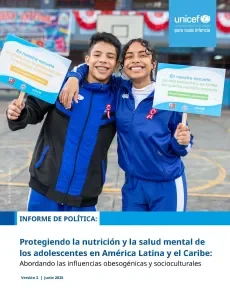
The study’s policy brief is now available in English and Spanish.
The launch of the brief was accompanied by the event Protección de la Nutrición y la Salud Mental de los y las Adolescentes en América Latina y el Caribe (Protecting the Nutrition and Mental Health of Adolescents in Latin America and the Caribbean) can be viewed here (in Spanish).
hera partners with organisations to co-design participatory, context-sensitive research that centres people’s lived experiences. Contact us to discuss how we can collaborate on research, evaluation, or learning initiatives in your context.